Medication support for dementia care
MedDementia
Calm, clear medication support for people living with dementia. For adults with Alzheimer's disease and other forms of dementia, remembering medication is one of the hardest parts of the day — MedDementia turns it into one gentle question at a time, and keeps the caregivers who matter in the loop.
- React Native
- Expo
- TypeScript
- React Navigation
Forgetting medication is dangerous
Dementia gradually takes away the very skills medication routines depend on: remembering what to take, when to take it, and whether it's already been taken. Missed doses lead to health complications, hospitalizations, and lost independence — and caregivers can't always be there.
50%
of elderly patients don't take their medications as prescribed
125K+
deaths every year are linked to medication non-adherence
Designed around how dementia changes daily life
MedDementia isn't a general reminder app with the volume turned up. Every decision starts from what people living with Alzheimer's and other dementias — and the people caring for them — actually need.
Simplified reminders
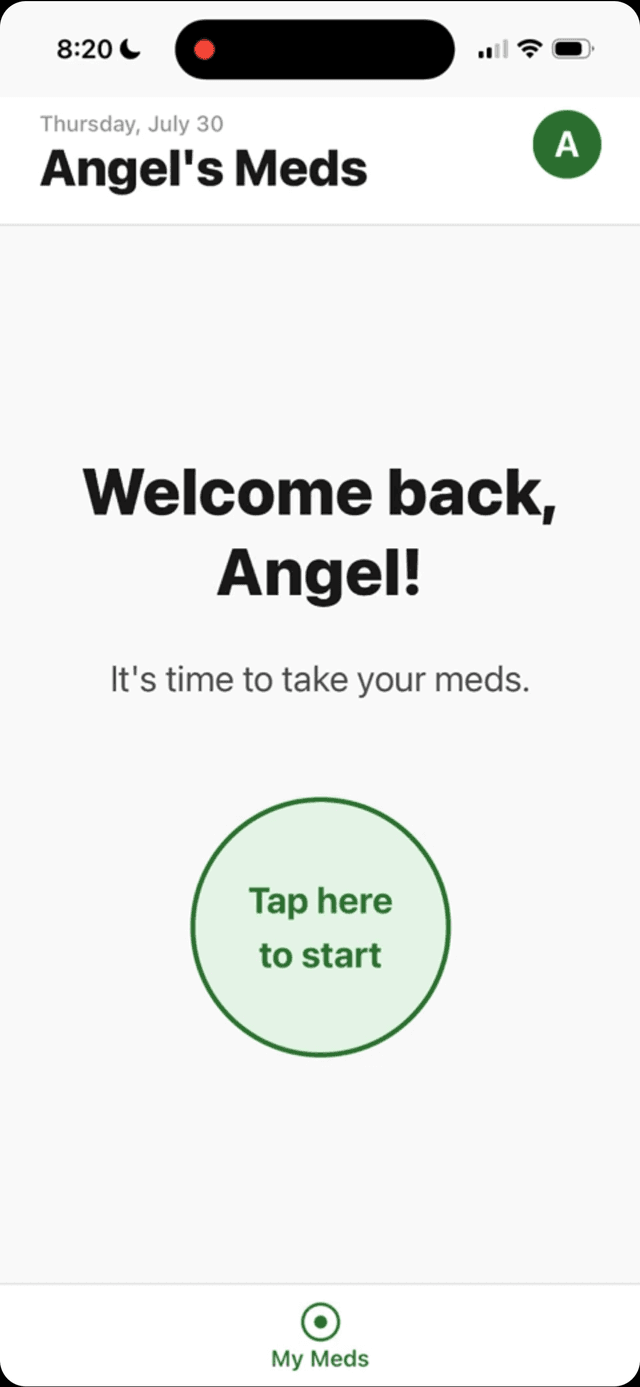
No lists to manage or menus to search. When it's time, the app asks one question about one medication — with a photo of the pill and two large buttons: Yes or No.
Reduced confusion
Every screen shows the day and date, uses large high-contrast text, and offers a single primary action. No hidden gestures, no animations, nothing unexpected.
Caregiver support
Every check-in is recorded automatically with a timestamp, building an adherence history caregivers and providers can review — no paper logs, no guesswork between shifts.
Accessible by design
Built for aging eyes and changing memory: big touch targets, written-out labels, photo-based recognition, and a one-tap connection to a trusted caregiver when something feels wrong.
A calm daily experience
The whole app fits in four screens. That's the point.
1. A warm, familiar welcome — one big button, nothing else to figure out.
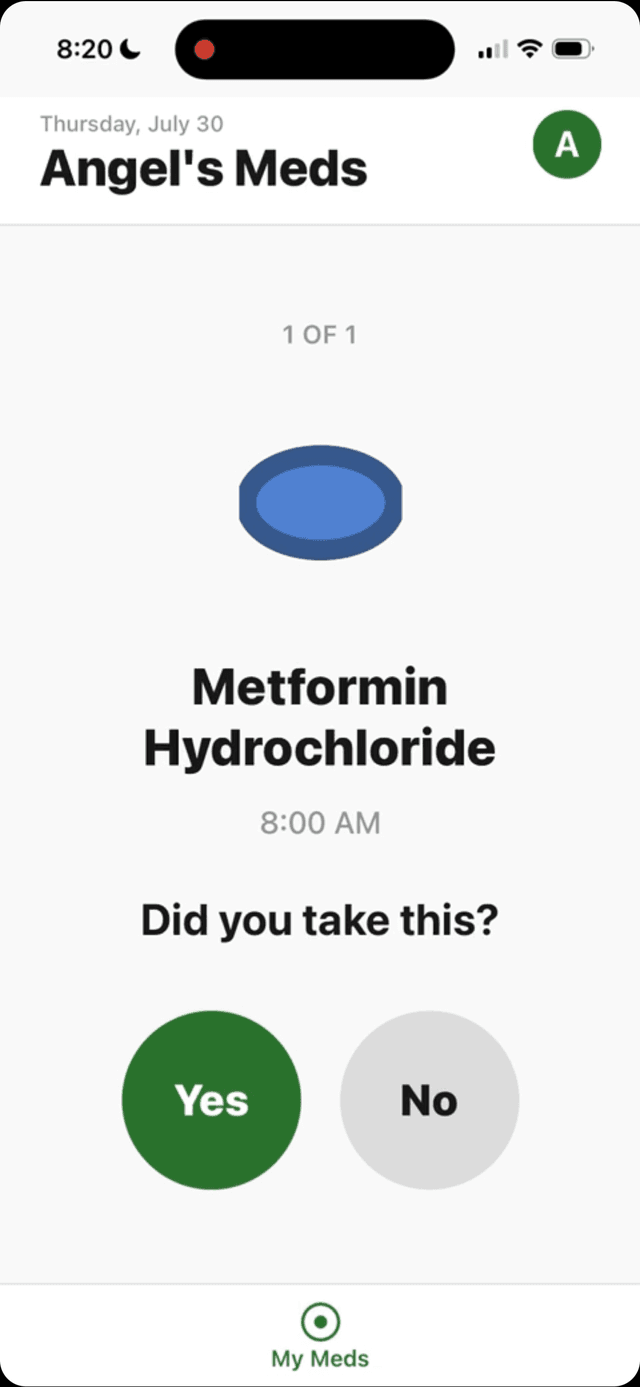
2. One medication at a time, with a picture of the pill and a simple yes or no.
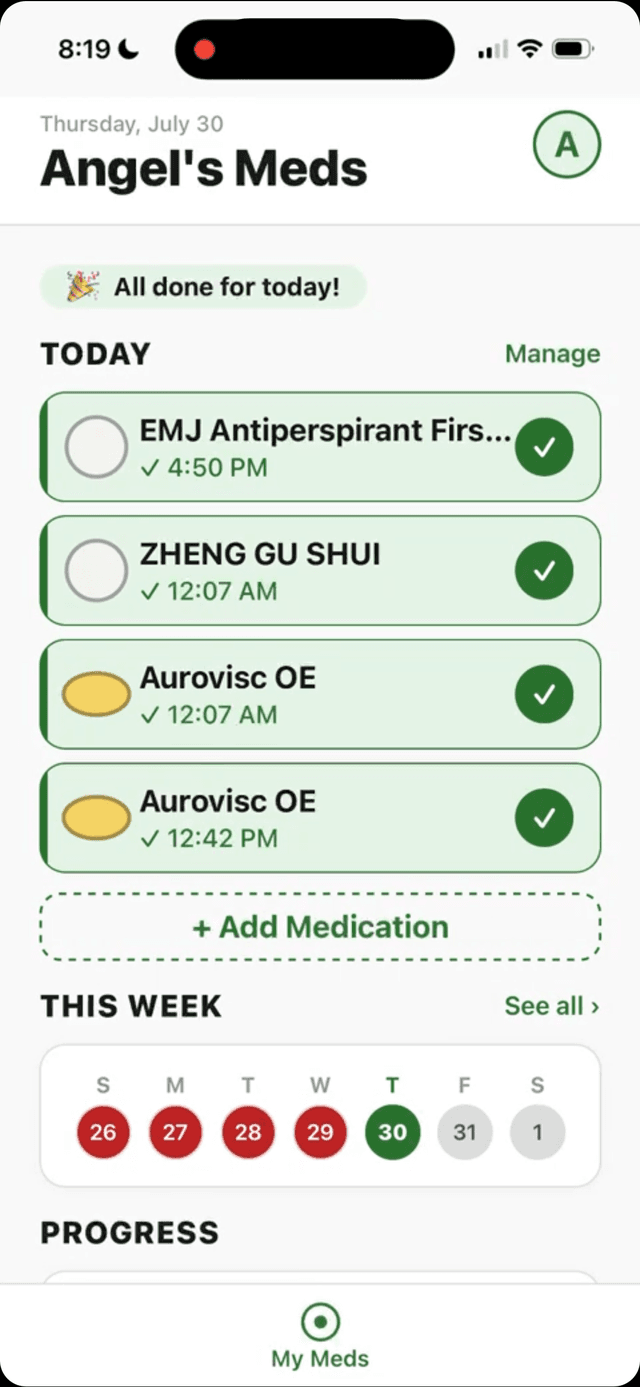
3. Today at a glance — every dose checked off, with the week's progress below.
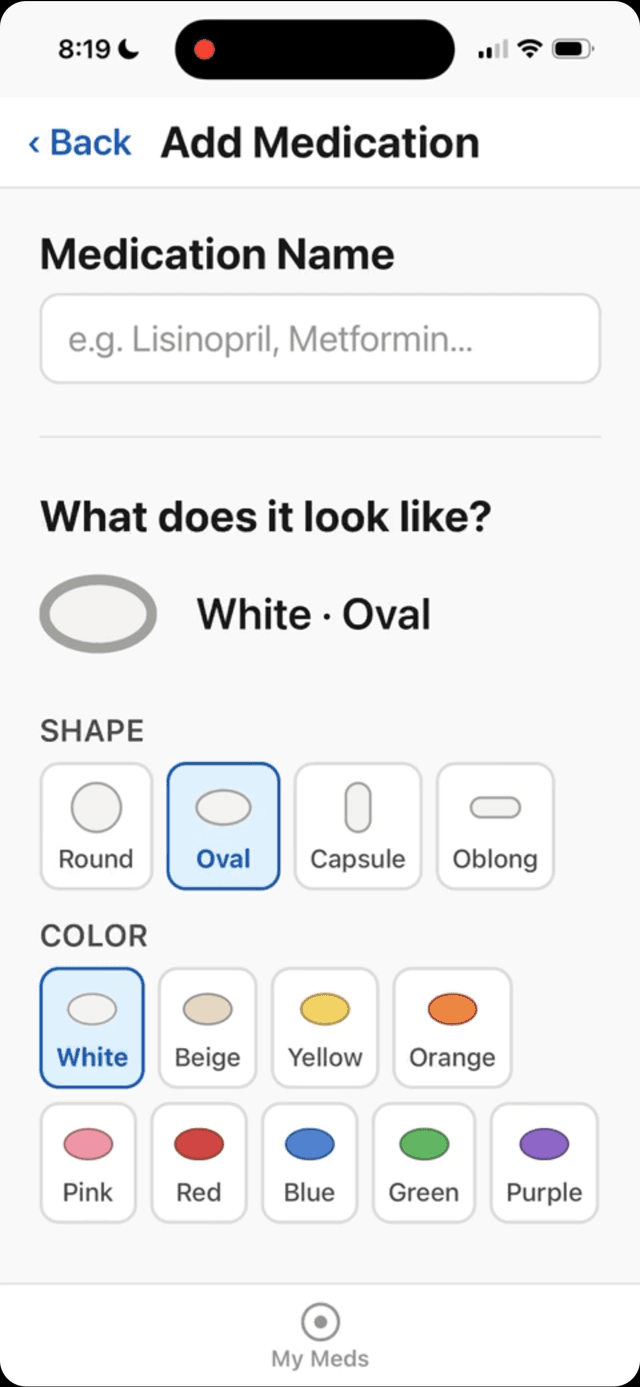
4. Caregivers add medications by shape and color, so pills are recognized on sight.
See it in action
A real run-through of the daily flow: the welcome check-in, one medication at a time with a photo of each pill, and the day's progress — every step recorded automatically for caregivers.
The recording plays silently and loops on its own.
About the project
MedDementia started as a hackathon project built by a five-person team, and grew out of conversations about how much of dementia care falls on family members. I worked on the patient-facing experience, from the initial wireframes through building the React Native prototype.